Do I need blue light glasses? Is blue light dangerous? Are blue light glasses nonsense? We are happy to explain.
Discover which blue light glasses suit you best
Why blue light glasses?
Blue light is not unhealthy by definition. In fact, it is essential. Light is the most important biological time signal, or Zeitgeber, for our body and helps us maintain a healthy day-night rhythm. This rhythm, also known as the circadian rhythm or biorhythm, is crucial for your overall health. It is not blue light itself, but mainly the timing, source and intensity that can cause problems.
Blue light is short-wavelength, high-energy light that naturally occurs in sunlight. In the morning, your body actually needs this blue light to wake up properly and become active.
Blue light in the modern world
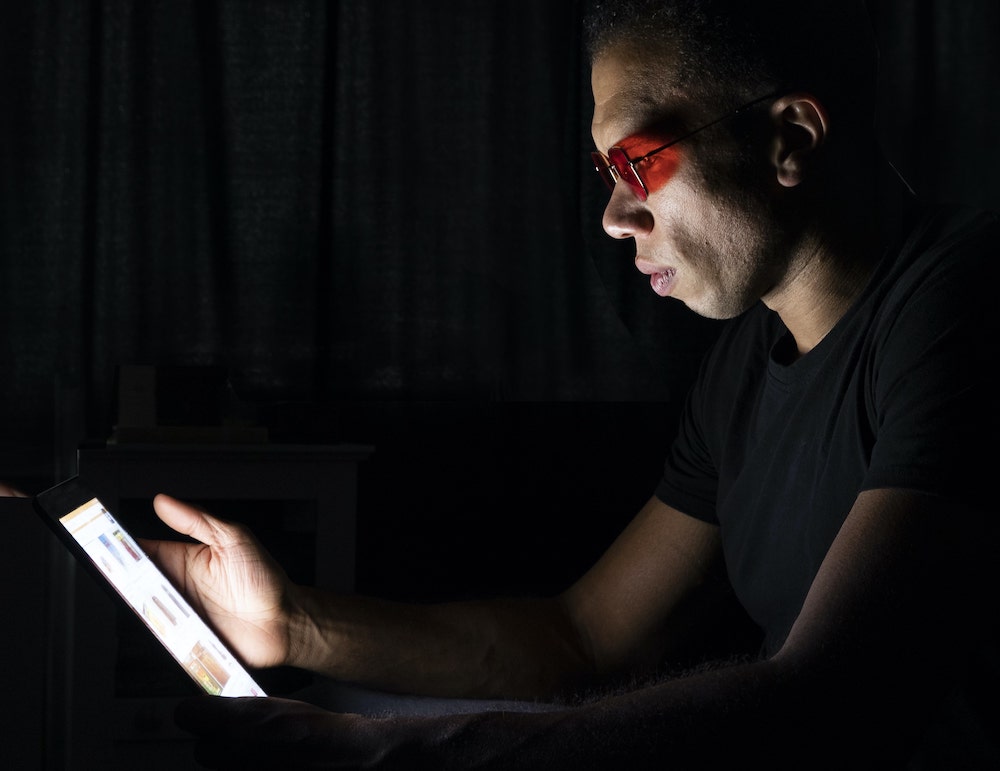
Blue light is emitted not only by the sun, but also by many artificial sources such as smartphones, laptops, tablets, LED lighting and televisions.
But also think of car headlights, dashboard lighting, lighting in offices and workplaces, on buses and trains, and modern street lighting.
In modern life, this unnatural blue light is therefore present almost everywhere and in large amounts.
What is the problem? Blue light in the evening
The challenge mainly arises after sunset. Exposure to blue, and also green, light in the evening disrupts your melatonin production. This affects your sleep quality and throws your day-night rhythm out of balance. This has consequences for your recovery, energy and overall health.
Melatonin is one of the most important sleep-related hormones and plays a central role in your biological clock. When melatonin production is structurally disrupted, this can lead to a clear imbalance in both sleep and biorhythm.
You do not have to completely change your lifestyle to improve this. By filtering the right light at the right time, you can support your biological rhythm.
What does science say?
A disrupted day-night rhythm affects recovery, energy and overall health. The World Health Organization also points out that long-term disruption of the day-night rhythm, such as with night work, is associated with health risks.
The internal rhythm of your body becomes unbalanced and negatively affects the quality of your sleep, especially REM sleep and deep sleep. These sleep phases are essential for the recovery of body and mind.
There has been extensive research into the influence of light on our health. In 2023, a scientific consensus was published on this subject: an international group of 248 circadian researchers described that both light spectrum and timing have a major impact on the circadian system and therefore on health. Moore-Ede et al. (2023), Lights should support circadian rhythms: evidence-based scientific consensus.
Research by the Dutch RIVM (2019), in collaboration with Amsterdam UMC and the Netherlands Institute for Neuroscience, also concludes that frequent or prolonged screen use in the evening is associated with disrupted sleep. Reducing screen use before bedtime, or wearing blue light blocking glasses, was associated with a reduction in complaints.
Do you want to apply these insights directly in your daily life? Then reducing blue light in the evening is the most effective first step.
Discover the UV550 blue light glasses
Common symptoms of too much blue light
- Disrupted biorhythm
- Difficulty falling asleep
- Difficulty staying asleep
- Waking up tired
- Concentration problems
- Daytime fatigue
- Headaches or migraines
- Irritability
- Tired and/or burning eyes
What are blue light glasses? What are the differences?
Blue light glasses can be divided into three categories:
- Glasses with orange-red filter lenses
- Glasses with yellow filter lenses
- Glasses with transparent lenses
In addition to these categories, there are also clear quality differences: the type of lens material, the multi-layer anti-reflective coating, and the material and design of the frame all make a significant difference in practice. At BIONAUT™, we make all glasses ourselves. This allows us to guarantee top quality and offer a superior price-quality ratio. Thanks to our expertise and quality, we are one of the few companies capable of making blue light glasses with prescription lenses. High-quality freeform lenses from +10 to -10, multifocal lenses, cylinders, prisms… everything is possible.
1. Orange-red SLEEP 550 NM lenses – maximum filtering in the evening
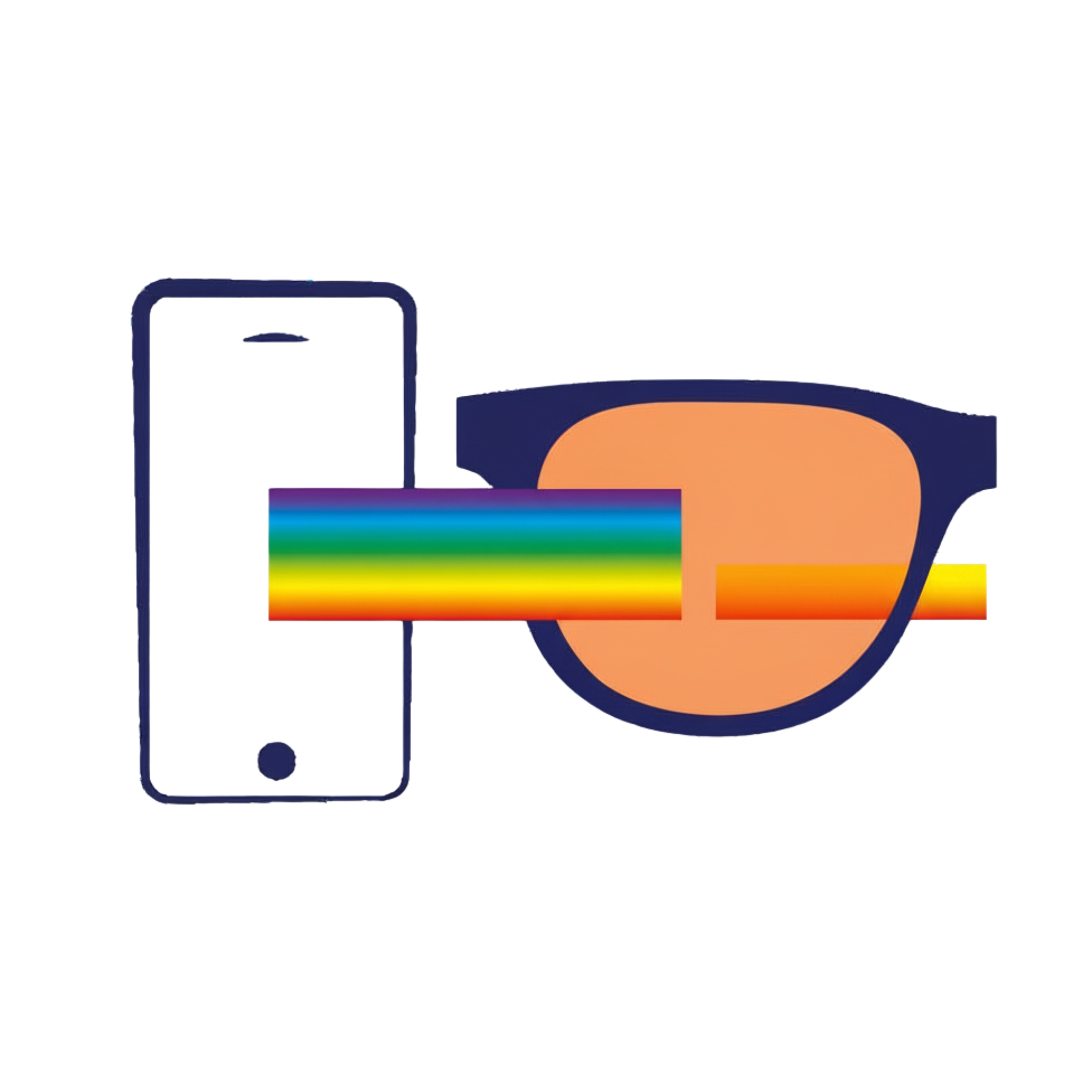
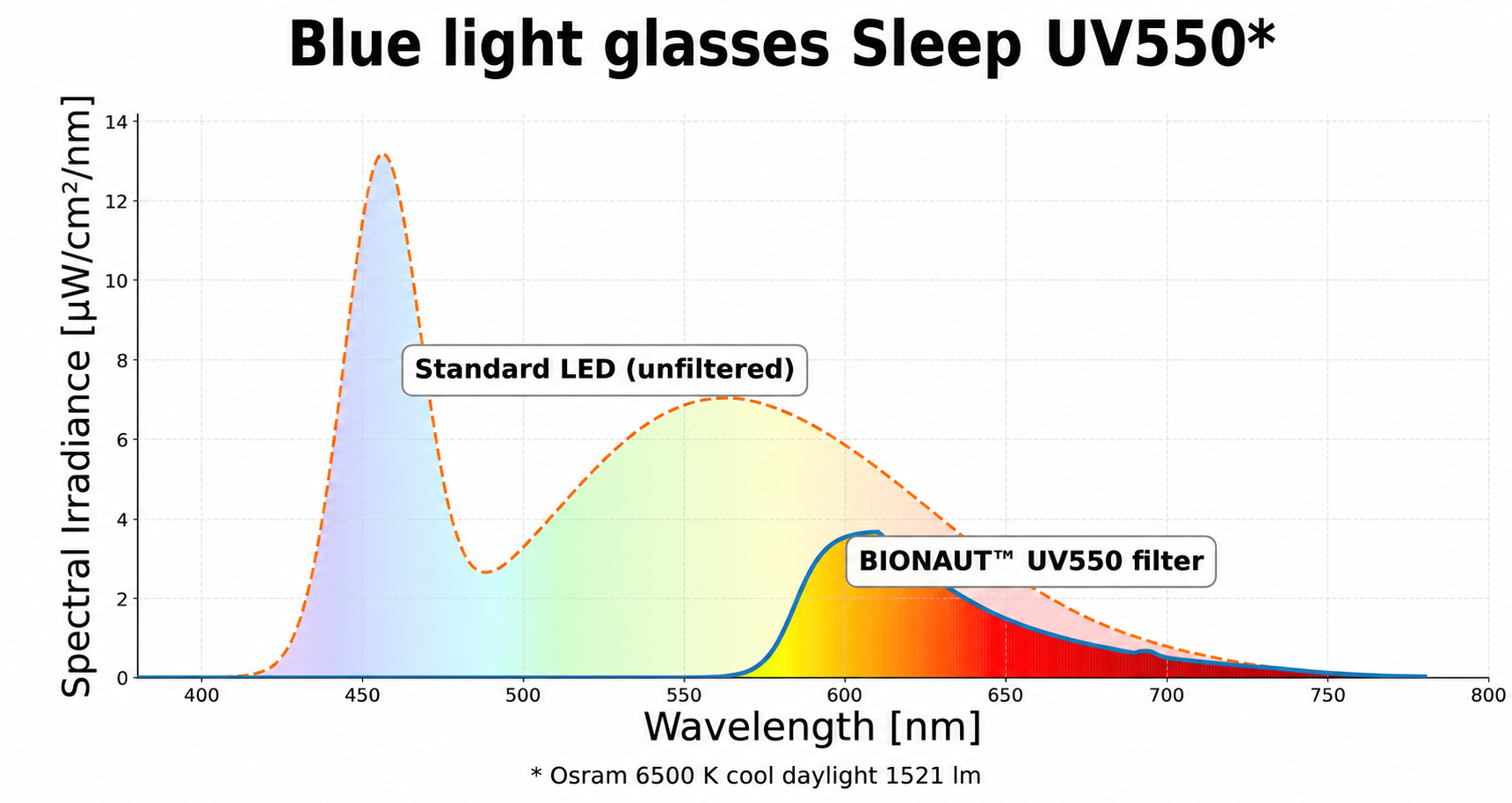
The orange-red “Sleep” lenses from BIONAUT™ have a specially developed filter designed to block all blue and green light. Good blue light glasses block 100% of all blue and green light up to 550 nanometres. Green light is also activating for the brain and influences melatonin production. Light up to 550 nanometres is the part of the light spectrum that most strongly disrupts melatonin production.
These lenses are intended for evening use, after sunset, when your body needs to prepare for rest and sleep.
Who are these glasses for?
Do you still use a smartphone, laptop or tablet in the evening, or watch television? Or do you work irregular hours and are you exposed to artificial light in the evening or at night?
Then these glasses can be a logical choice.
What can you expect?
- Blocks 100% of blue and green light up to 550 nm
- Supports natural melatonin production
- Supports deep sleep and REM sleep
- Based on scientific insights
- Ideal for irregular working hours to support your circadian rhythm
- Perfect for use during irregular work to optimise your circadian rhythm
- Ideal for air travel and recovering from jet lag
- Not suitable or permitted for use in traffic
When should you use these glasses?
- In the evening after sunset, or two to three hours before going to sleep
- When using a smartphone, laptop, tablet or television
- Under artificial lighting in the evening
- Strategically during irregular working hours or night shifts
- During air travel or with jet lag
- For very light-sensitive eyes
- For retinitis pigmentosa
Important to know
The orange-red UV550 lenses are wonderful to wear and feel like “a soothing balm for the eyes”. Everything calms down.
For most people, the biggest benefit lies in reducing light exposure in the evening.
Because of the filtering, contrast decreases. That is why these lenses are not suitable and not permitted for use in traffic. With daily use, we advise caution when walking and moving around because of the reduced contrast.
2. Yellow WORK 480 NM lenses – balance for daytime use
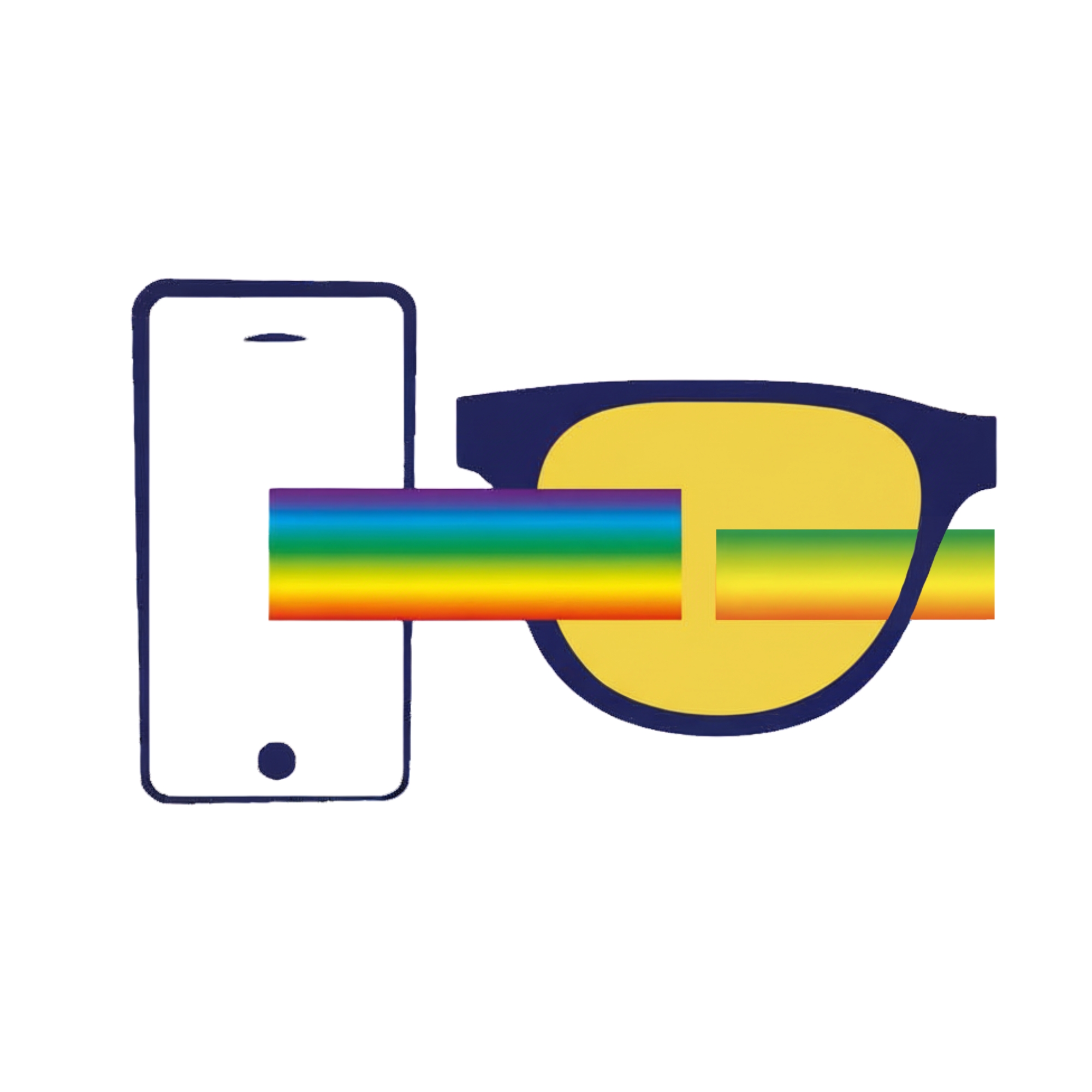
Our glasses with yellow WORK 480 NM lenses have been specially developed for daytime use, early evening use and situations where visual comfort and safety are important, such as in traffic.
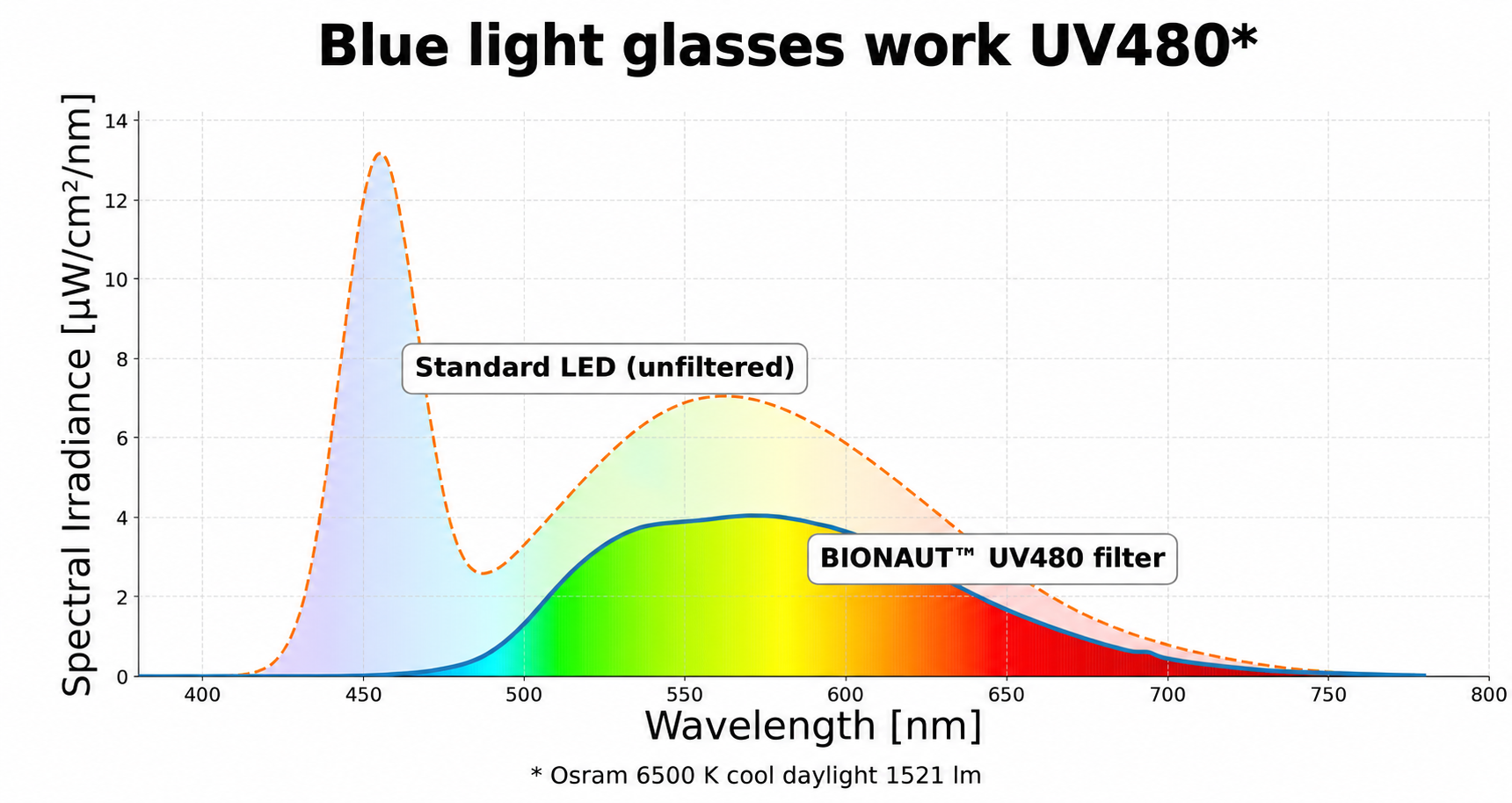
While our orange-red SLEEP 550 NM lenses are focused on maximum filtering in the evening, the Work lenses provide balanced filtering of blue light up to 480 nm. This helps support your natural rhythm without sacrificing too much vision, colour and contrast.
Who are these glasses for?
Do you spend a lot of time working behind a screen, or do you spend most of your day under artificial lighting? Then your body is continuously exposed to blue light stimuli. This type of light stimulates alertness and can influence your biological clock.
The yellow WORK 480 NM lenses help reduce this strain and bring more calm and balance during the day.
What can you expect?
- Filters blue light up to 480 nm — the part of the spectrum that most strongly influences your biological clock
- Supports a natural transition from day to evening
- Contributes to more visual comfort and less overstimulation
- Ideal for gaming: maintains contrast while protecting against excessive blue light
- Suitable for light-sensitive eyes
- Permitted for use in traffic
- Reduces discomfort from bright light and glare while driving
When should you use these glasses?
- While working behind a computer or laptop
- In the office under artificial lighting
- While driving at dusk or in the dark
- During prolonged screen use or gaming
Developed through practical experience
The yellow Work lenses from BIONAUT™ were developed based on practical experience and insights from circadian biology. They offer an effective balance between protection and functionality, exactly what you need in a modern, light-intensive environment.
Do you work a lot behind a screen or spend a lot of time in artificial light? Then these glasses can be a valuable addition.
Transparent blue light glasses
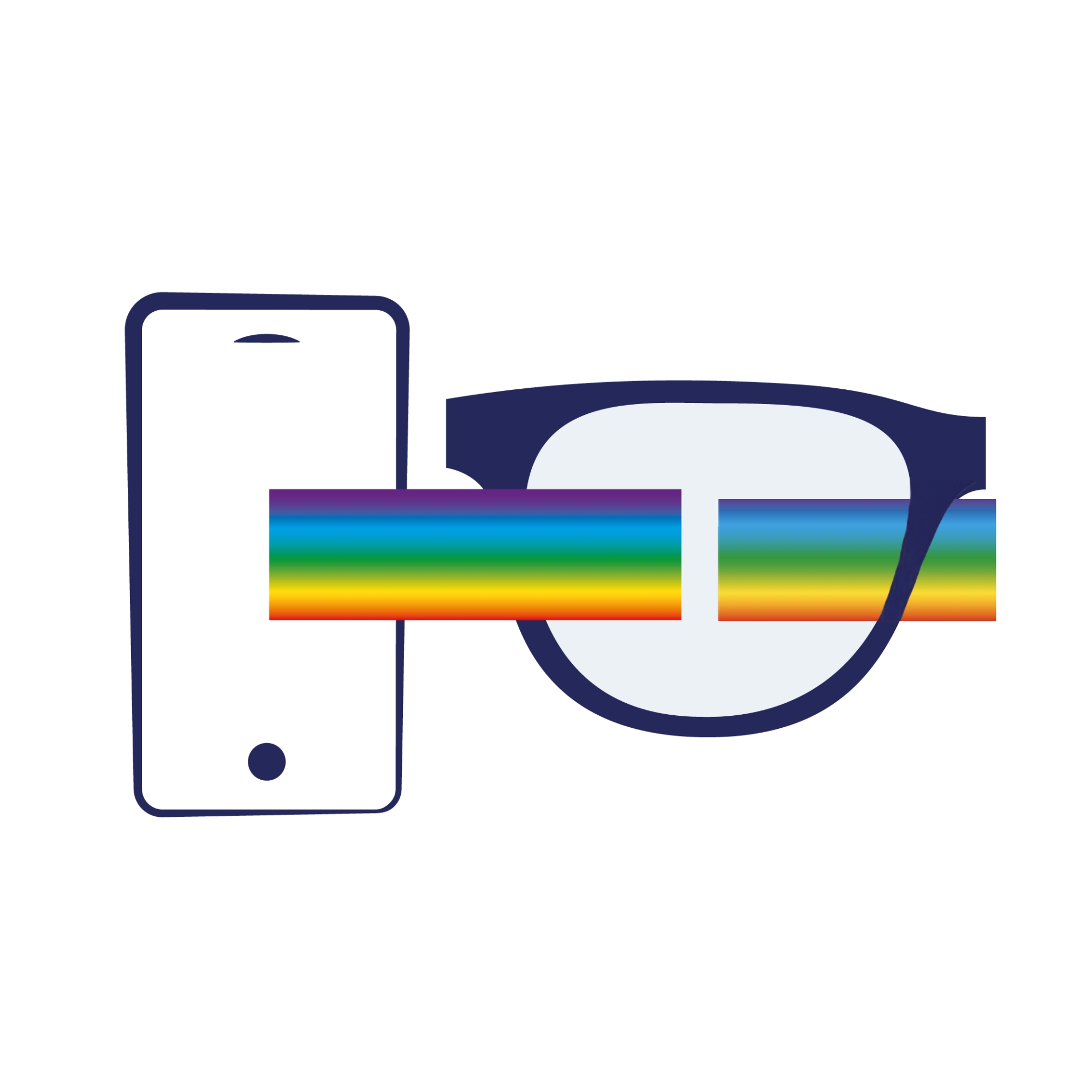
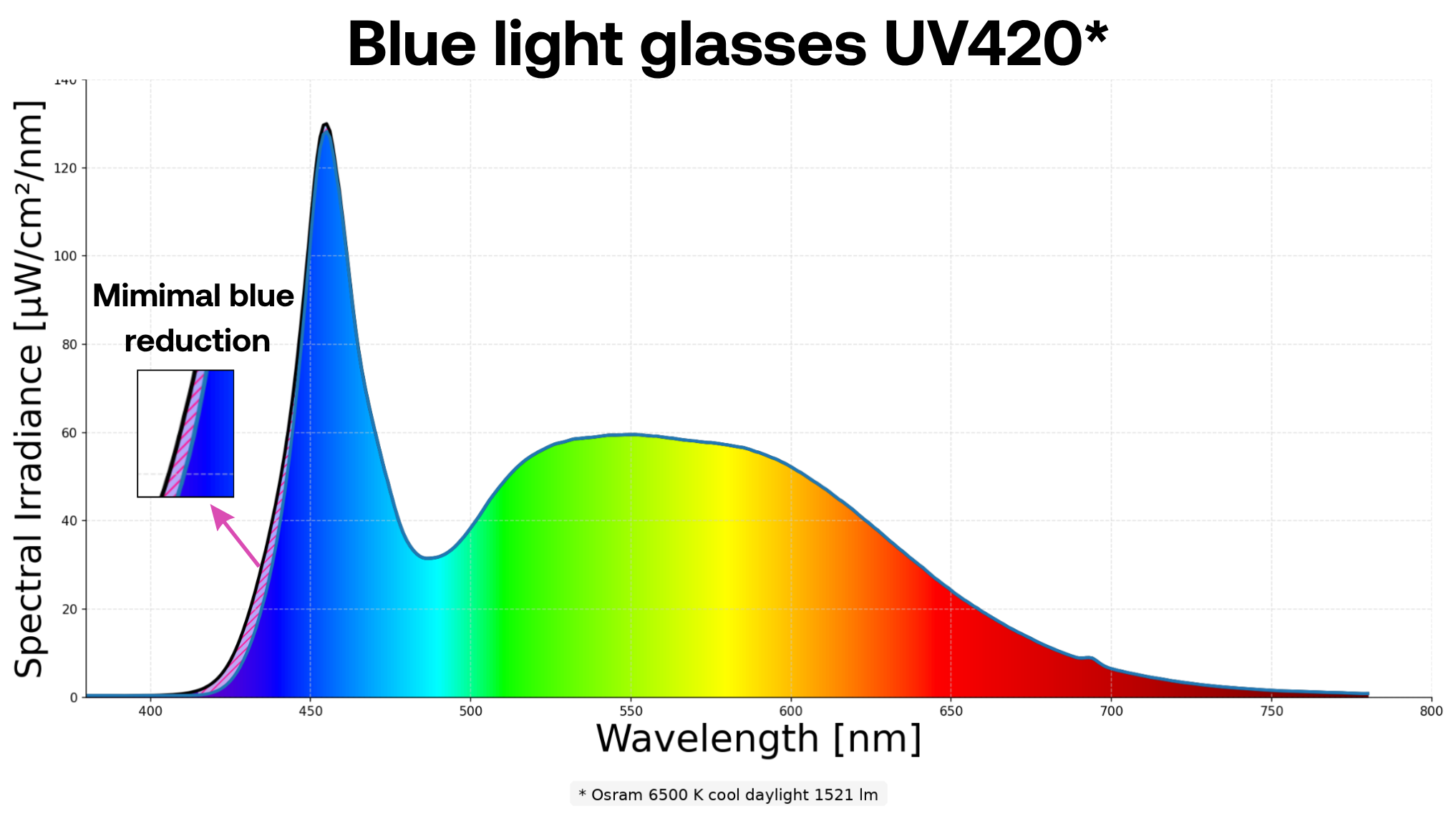
The third category consists of transparent blue light glasses, usually with filtering up to approximately 420 nanometres.
We can be very brief about these glasses. This is a misleading product and offers little to no benefit. We do not sell this product. These glasses are sold by many companies as blue light filters.
But these glasses have no therapeutic effect whatsoever. Only a very small part of the blue spectrum is filtered. The effect of the UV420 filter is a minimal reduction of glare from lamps, which is barely noticeable.
If a lens is virtually 99.9% completely transparent, almost all light also passes through it.
Many people wear this kind of filter as their everyday glasses throughout the entire day. This may potentially have a negative effect on your biorhythm. We will explain this later.
What does this mean in concrete terms?
- They filter only a small part of blue light, up to approximately 420 nm
- They have no effect on your sleep or any other therapeutic function
- Transparent lenses have no functional scientific basis
- These types of glasses may reduce glare or halos from lighting slightly at most
If you really want to influence your sleep and day-night rhythm, the focus should be on glasses that filter a larger part of the light spectrum.
Conclusion
Blue light is an essential part of our day-night rhythm. The problem is not the light itself, but the moment at which you are exposed to it.
For supporting sleep and circadian rhythm, orange-red blue light glasses, UV550 Sleep, are the most effective.
Yellow glasses can be a valuable addition during the day.
Transparent blue light glasses: do not buy them. They have no influence on improving your biological rhythm or any other health-related claim.
Sometimes we are forced to make our unnatural living environment feel a little more natural. You do not have to drastically change your lifestyle. By becoming more conscious of light and using the right glasses at the right time, you can make a big difference to your sleep, energy and wellbeing.
Blue light glasses are especially valuable when you still work behind a screen in the evening or are frequently exposed to LED lighting. Blue light is not “good” or “bad” — it is about the right light at the right time. In the evening, blue and green light influence your melatonin, and therefore your sleep and circadian rhythm.
When are blue light glasses useful? For example, if you recognise any of the following:
- Poor sleep quality or difficulty falling asleep and/or staying asleep
- Waking up tired
- Tired, burning eyes after screen use
- Headaches or overstimulation in the evening
- Irregular working hours, such as shift work, or frequent travel and jet lag
Choose the right filter: Sleep 550 NM, Work 480 NM or transparent
- Evening & before sleep: SLEEP 550 NM for maximum filtering of 100% blue and green light. This is the best choice if your goal is better sleep and supporting melatonin. Please note: because of the strong filtering, this type is not suitable for traffic.
- Daytime & early evening: WORK 480 NM, a balanced filter that takes the sharp edge off blue light while maintaining contrast and colour. Ideal for screen work, office lighting and driving.
- Transparent: Do not buy these glasses. They filter only a very small part of the blue spectrum. They have no real function unless you are choosing them purely for looks. No effect on sleep, hormones or biorhythm.
Tip: choose your blue light glasses based on when you wear them. For sleep improvement, evening filtering is most important; for comfort and focus during the day, a milder filter works better.